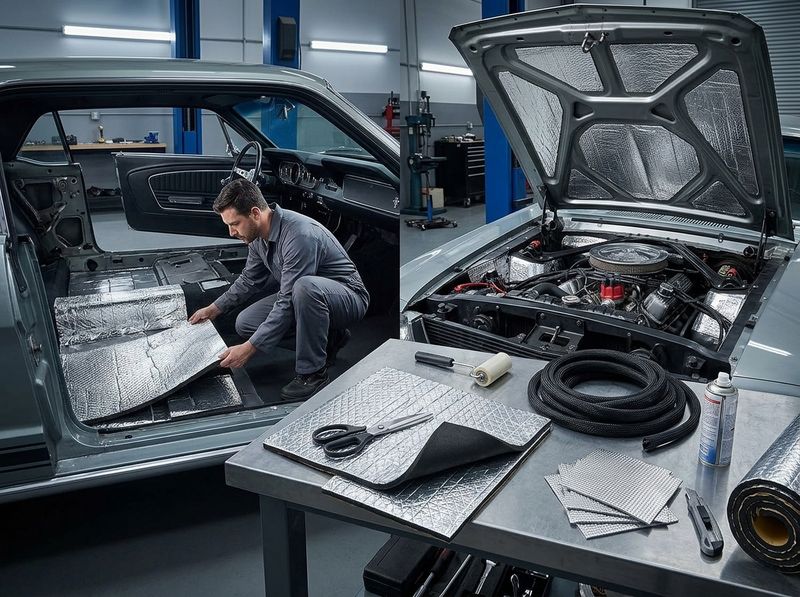
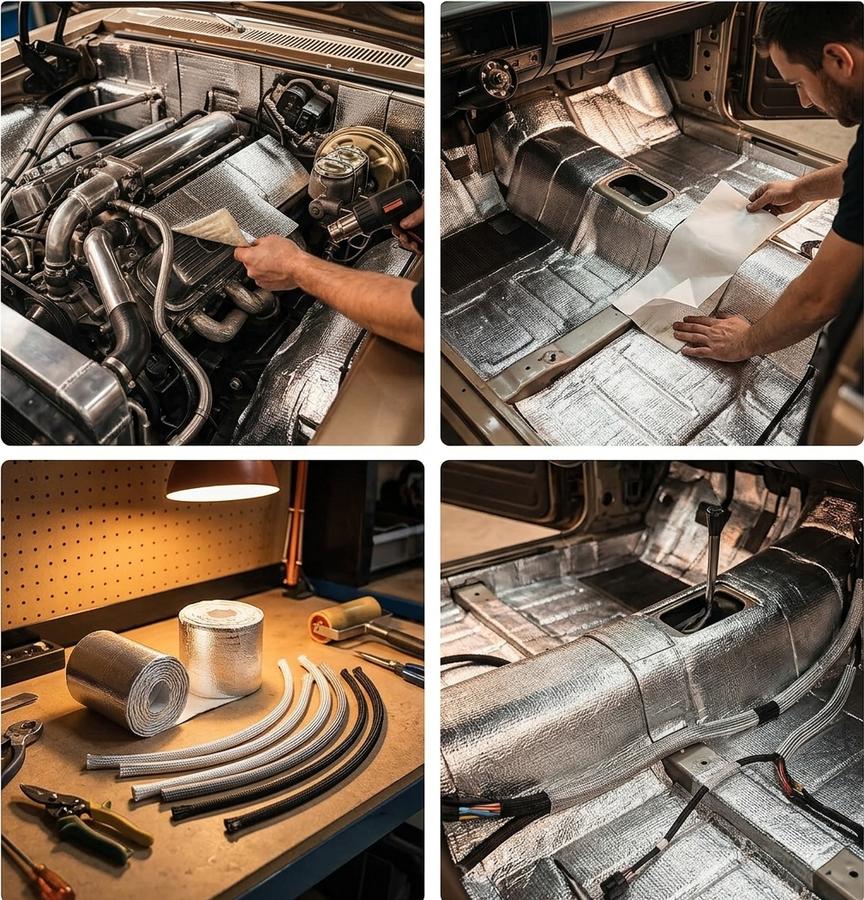
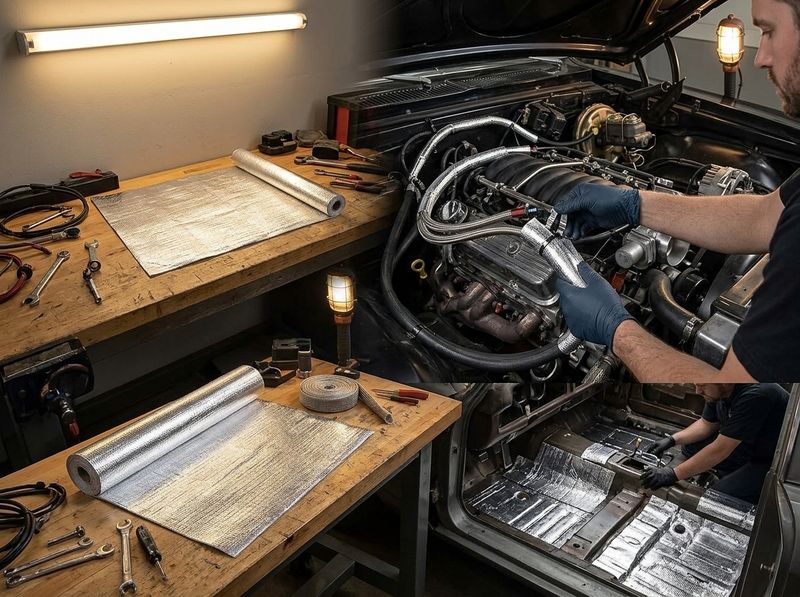
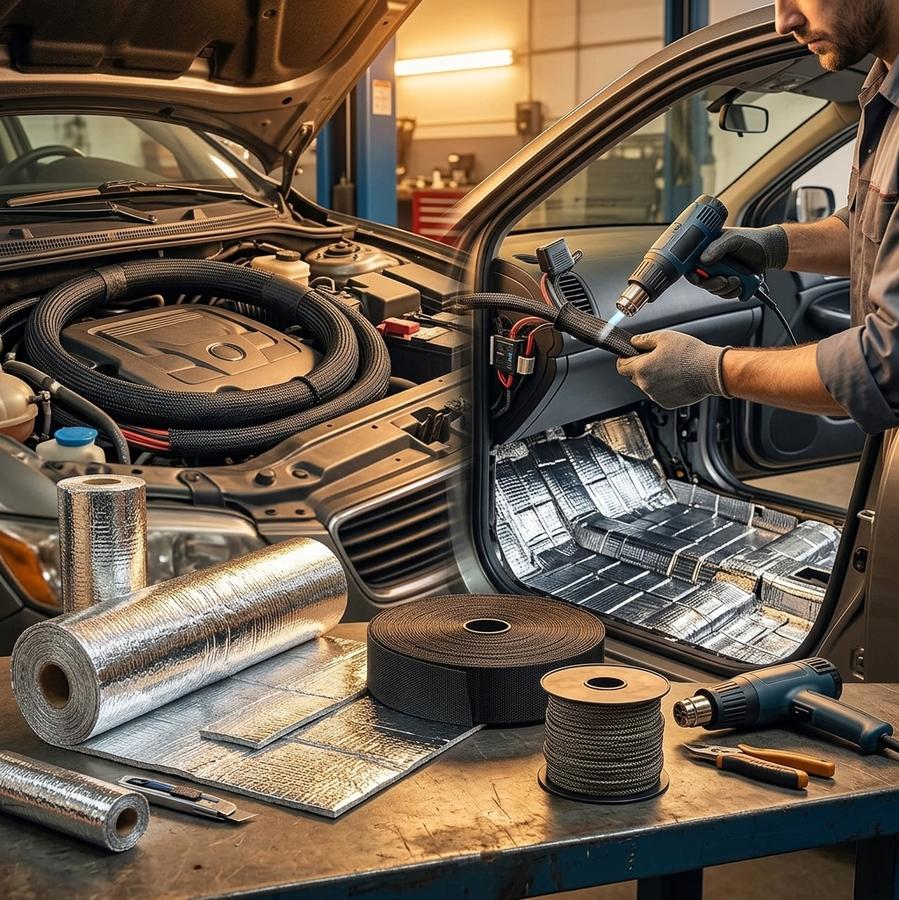
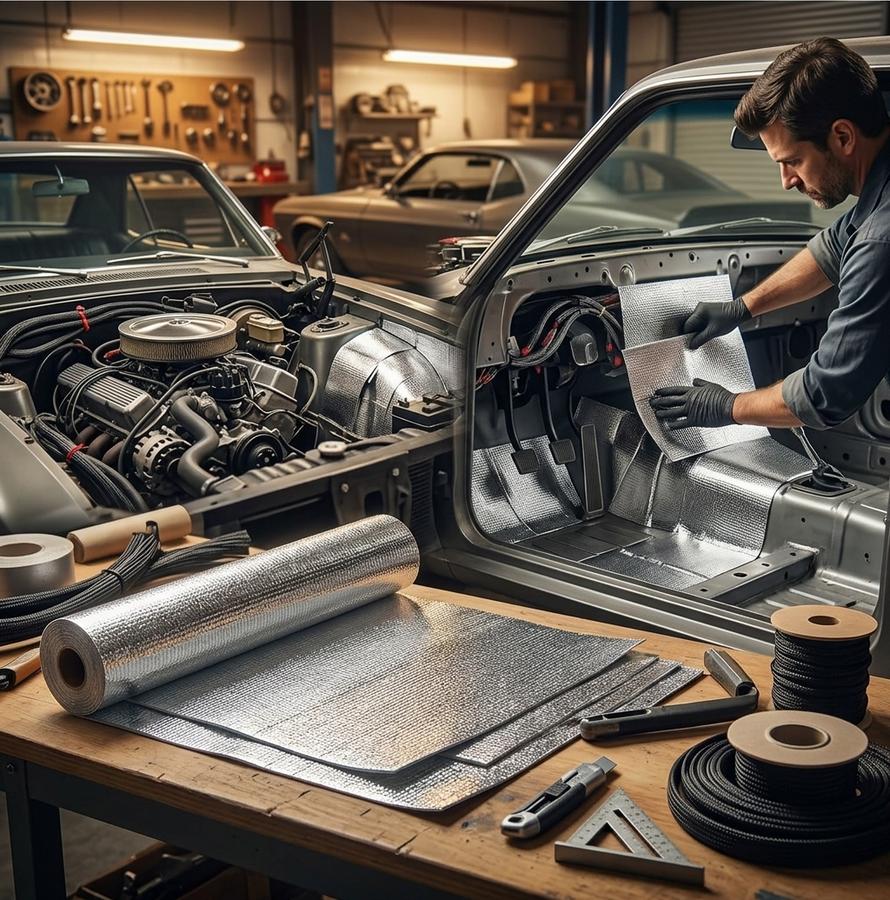
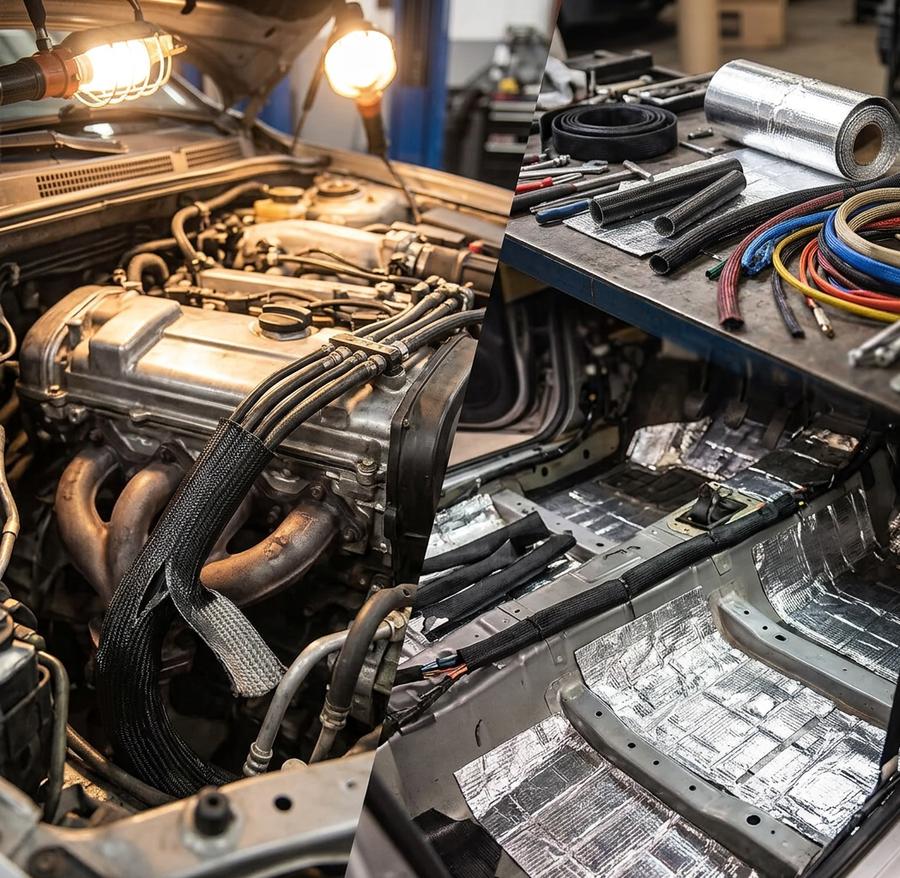
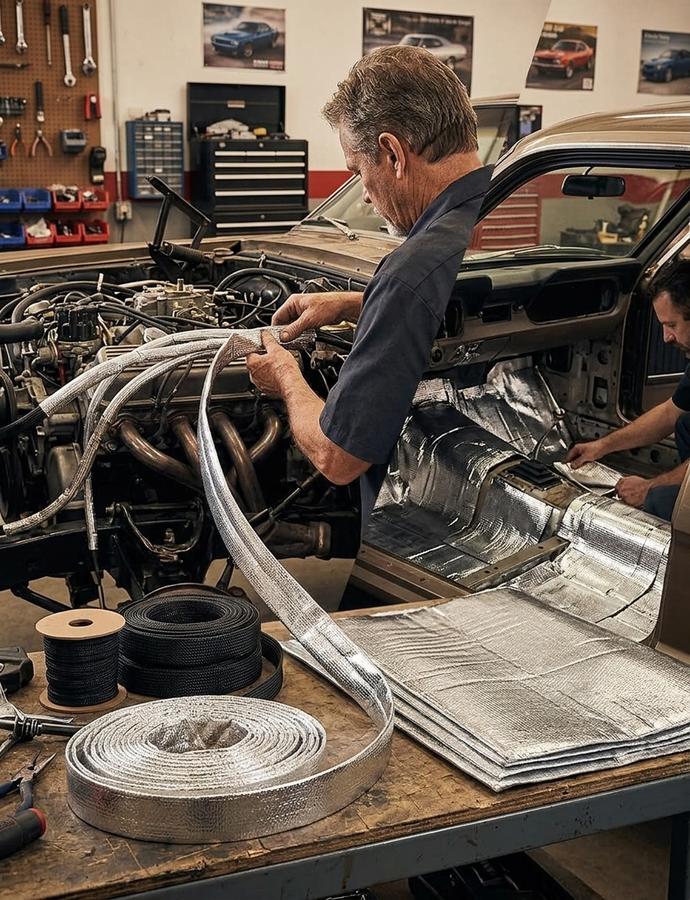
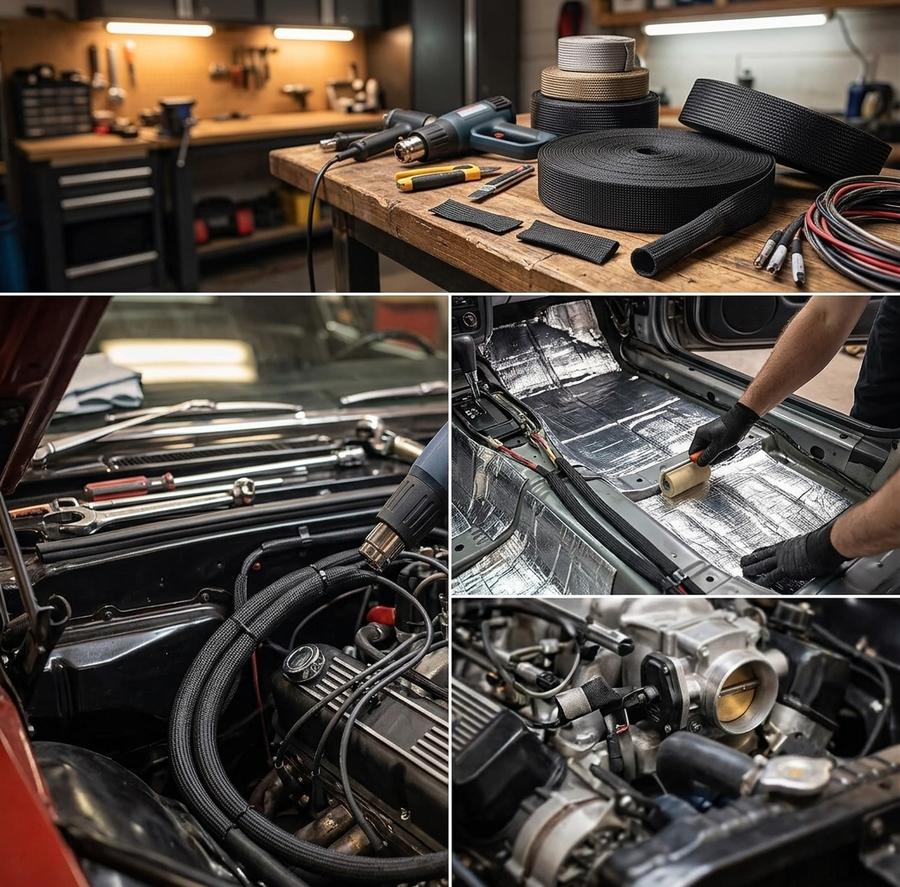
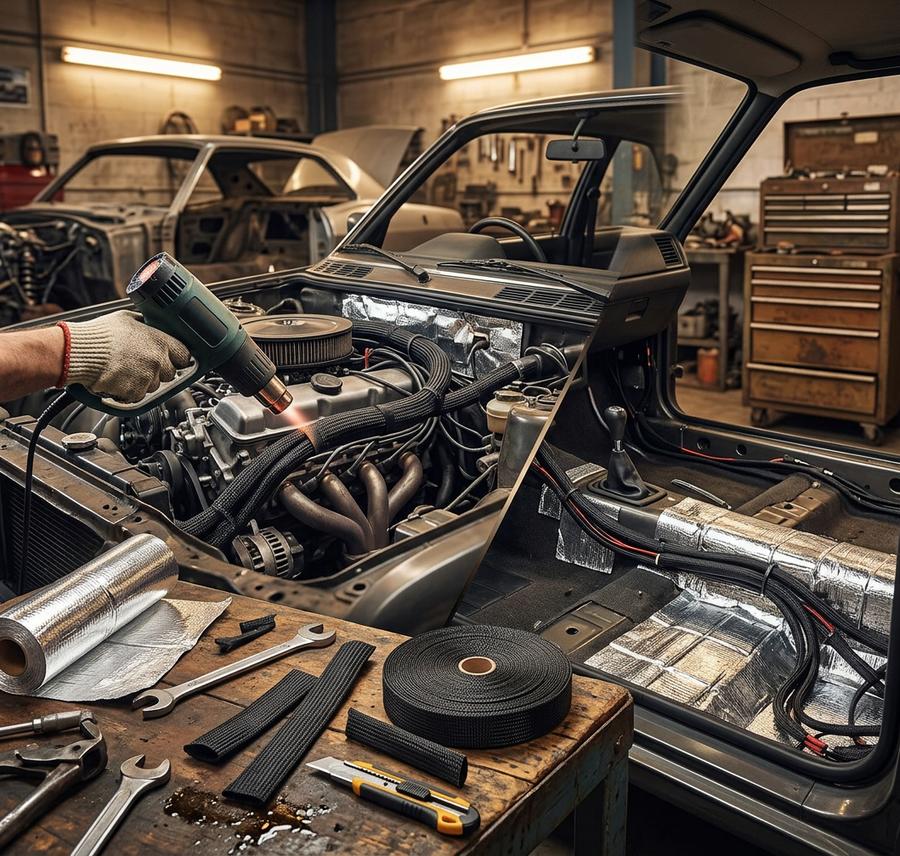
FOURUB heat shield and sound deadening install in a car engine bay

FOURUB automotive heat and sound insulation

Automotive Heat & Sound Insulation

Sound Deadening, Heat Shields, and Wire Sleeving — With Measured Numbers, Not Vague Claims

You've torched a ceramic mat's adhesive and watched it release at a temperature the listing never printed. FOURUB names both limits: 2300°F on the ceramic face, 230°F on the adhesive backing, so you know which side faces the header before you cut. Rated 4.5★ across 202 verified buyer reviews from builders who heat-soaked first.

  • Foam mat cuts cabin noise 6-10 dB and reflects 95.9% of surface heat in one layer
  • Ceramic mat rated 2300°F on the ceramic face, 230°F on the adhesive backing: both numbers printed, not just the big one
  • Braided sleeving survives 150,000 abrasion cycles before the weave wears through
4.5★202 verified buyer reviews
2300°Fceramic face rating
6-10 dBcabin noise drop

Why builders trust FOURUB

1-Year WarrantyTwo years on the flat braided sleeving
Flame-Retardant BuildPer manufacturer spec on mats and foam
Cut-to-Fit, No Power ToolsScissors or a utility knife handle every mat
Direct Customer Support30-day return window through the retailer

Our products

Sound deadening mats, ceramic heat shields, and wire sleeving, each labeled with the zone it covers and the temperature limit it holds.
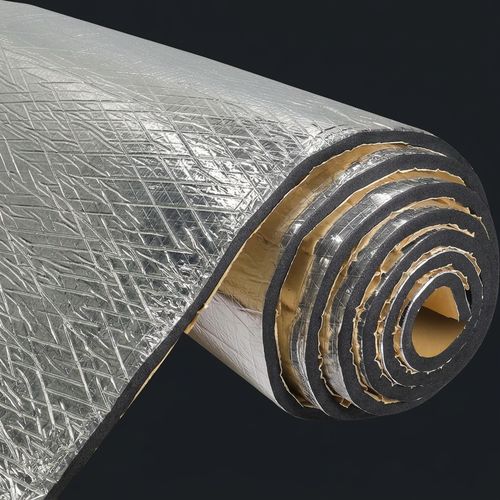
590mil Heat & Sound Deadening Foam Mat (26 sqft)

590mil Heat & Sound Deadening Foam Mat (26 sqft)

★ 4.7 (71)

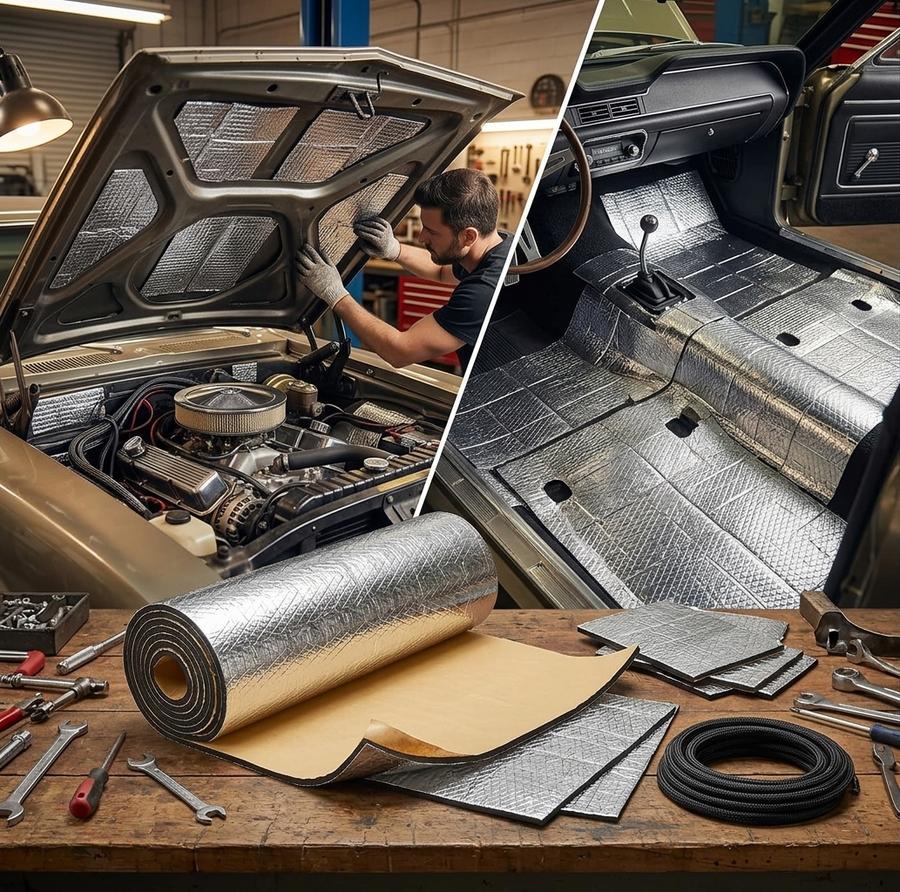
Cut the 15mm mat across a sedan floor pan and press it flat; one 26-sqft sheet covers the full floor without a seam at the center tunnel. The PE-foam-and-foil build drops road noise 6-10 dB and reflects 95.9% of underfloor surface heat in one layer, and the closed-cell foam won't soak up water from road spray. Where a single-layer foil barrier only bounces radiant heat, this mat absorbs vibration at the foam and turns back heat at the foil, both jobs in one install. Rated -30°F to 300°F and backed by a 1-year warranty, with a 30-day return if the 39-inch width won't match your floor pan after cutting.

  • Holds a full sedan floor pan in one 26-sqft sheet, no center-tunnel seam
  • PE foam absorbs road vibration while the foil layer turns back 95.9% of surface heat
  • 1-year warranty; 30-day return if the width won't match after cutting
Check price
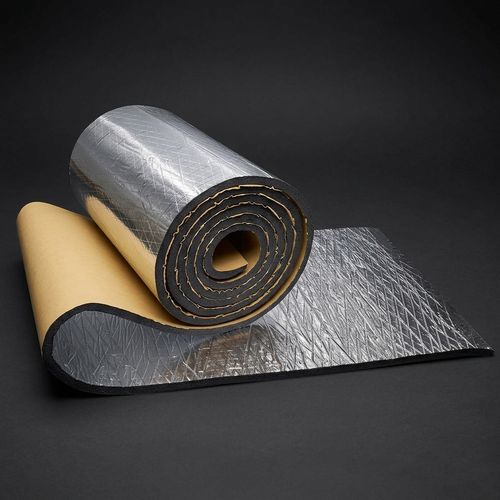
390mil Sound Deadening Heat Shield Mat (32.5 sqft)

390mil Sound Deadening Heat Shield Mat (32.5 sqft)

★ 5 (7)

Roll the 10mm mat down a sedan floor pan and carry the same piece up the firewall; the 32.5-sqft sheet spans both zones without a center seam or a second-run purchase. At a thinner 10mm profile it drops the same 6-10 dB and reflects 95.9% of surface heat as the 15mm sibling, and the 120-inch length gives the extra footage to wrap the tunnel edges. The thinner mat lies flush under carpet and floor mats, skipping the ridge a thicker mat leaves at the door sill. Backed by a 1-year warranty and a 30-day return window if the size doesn't match your pan.

  • One 32.5-sqft roll sheets floor pan and firewall from a single piece
  • 10mm profile lies flush under carpet while holding the 6-10 dB noise drop
  • Rated 5.0★ by verified buyers on floor-and-firewall installs
Check price
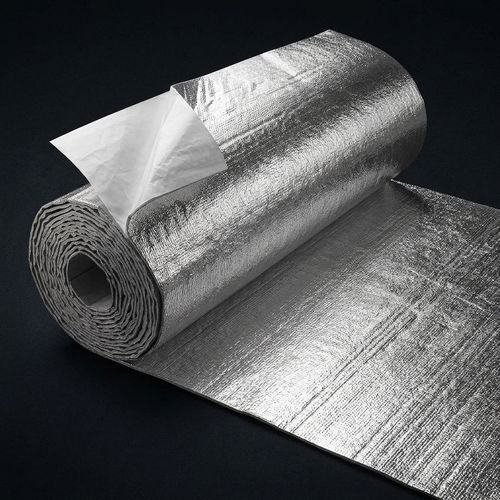
78mil Ceramic Fiber Heat Shield Mat (adhesive)

78mil Ceramic Fiber Heat Shield Mat (adhesive)

★ 4.2 (14)

Wrap the 78mil strip around a battery heat shield or firewall hot spot with the ceramic side against the radiant source and the adhesive backing on the cool metal behind it. The ceramic fiber face holds 2300°F continuous and reflects up to 97% of radiant heat, while the 230°F adhesive keeps it stuck to flat, clean surfaces away from direct flame. Where a standard foil-foam mat rated 400-600°F would melt against a glowing header, this ceramic layer survives direct source contact. The 11.8-inch width cuts down to narrow strips for header primaries, with a 30-day return if the dimensions don't match your install zone.

  • Faces 2300°F on the ceramic side against a firewall or battery hot spot
  • Ceramic fiber reflects up to 97% radiant heat; 230°F adhesive grips only cool metal
  • Survives direct header contact where a 400-600°F foil-foam mat melts
Check price
195mil Ceramic Fiber Heat Shield Mat (non-adhesive)

195mil Ceramic Fiber Heat Shield Mat (non-adhesive)

★ 3.8 (21)

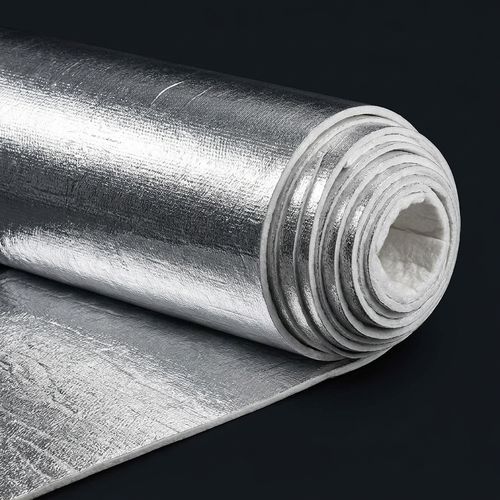
Mount the 195mil sheet over a vibrating exhaust section with stainless-steel zip ties through the pre-cut slots; the thick ceramic layer absorbs and reflects exhaust radiant heat without a peel-back adhesive that fails on a moving surface. At 195mil the ceramic layer runs more than twice the thickness of the 78mil adhesive version, and the zip-tie mount grips where adhesive has none. Peel-back ceramic mats release when vibration and heat combine over 230°F; the mechanical zip-tie lock stays put regardless of backing temp. The 15-by-24 inch panel gives no single adhesive point to fail, with a 30-day return if it won't cover your exhaust zone.

  • Cinches over a vibrating exhaust with zip ties, no adhesive to peel
  • 195mil ceramic runs twice the adhesive version's thickness for direct exhaust heat
  • Zip-tie lock holds where peel-back adhesive releases above 230°F
Check price
78mil Ceramic Fiber Heat Shield Mat (28in x 35in)

78mil Ceramic Fiber Heat Shield Mat (28in x 35in)

★ 3.6 (13)

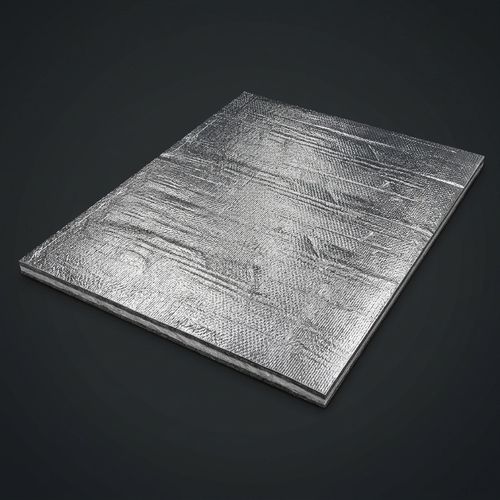
Sheet a firewall and transmission tunnel with the 28-by-35 inch adhesive ceramic mat in one panel, skipping the spliced shorter pieces that leave radiant-heat gaps at the joins. It runs the same 78mil ceramic fiber and adhesive build as the narrow strip, sized to span a full sedan firewall width. On any surface hotter than 230°F, like the exhaust pipe itself, the adhesive releases, so this panel belongs on firewall and under-hood metal that stays below the backing limit. Press it onto clean, cool metal for the strongest bond, with a 30-day return if the 28-inch width overspans your panel.

  • Spans a full firewall in one 28-by-35 inch panel, no spliced joins
  • 78mil ceramic fiber with adhesive rated to 230°F for cool-metal surfaces
  • 30-day return if the width overspans your panel
Check price
Silicone Coated Fiberglass Heat Shield Sleeve

Silicone Coated Fiberglass Heat Shield Sleeve

★ 4.6 (20)

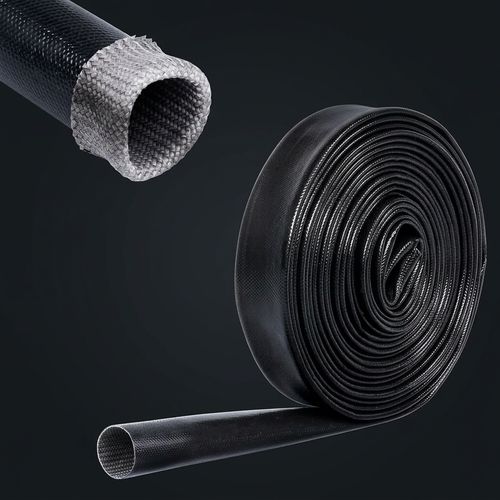
Slide the 5/8 inch silicone fiberglass sleeve over a spark plug wire that runs beside the exhaust manifold; it holds 380-393°F continuous and 500°F intermittent for brief manifold proximity. The silicone-coated fiberglass weave takes continuous heat without an aluminum-foil layer, staying flexible enough to bend around tight engine-bay routing with no cracking at the coil end. An aluminum foil sleeve holds 485°F continuous at a lower profile, while this silicone fiberglass runs thicker-walled and more bend-tolerant for plug wire routes with multiple turns. The 12-foot length covers a full plug set, backed by a 1-year warranty and a 30-day return if the ID is too tight for the boots.

  • Sleeves a spark plug wire beside the manifold at 380-393°F continuous
  • Silicone-coated fiberglass bends around tight routing without cracking at the coil
  • More bend-tolerant than a foil sleeve for multi-turn plug wire runs
Check price
Aluminum Foil Heat Shield Sleeve

Aluminum Foil Heat Shield Sleeve

★ 4.7 (27)

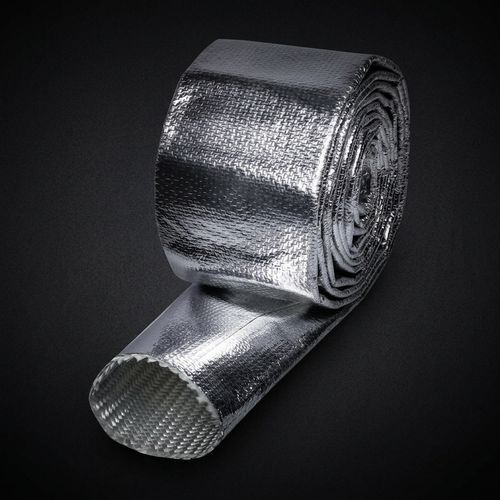
Wrap the aluminum foil sleeve over a fuel line running beside the turbocharger, clamp each end, and the 485°F continuous rating holds the fuel below its vaporization point through a summer idle heat soak. The foil reflects up to 90% of incident radiant heat and stays stable to -40°F, so a hard winter start won't crack the material. Where a foam insulation wrap absorbs heat until it saturates and then conducts it into the line, this sleeve reflects the radiant load before it reaches the surface. The 6-foot length covers most engine-bay runs, with a 30-day return if the 1.5-inch ID won't clear your line diameter.

  • Holds a turbo-adjacent fuel line below vaporization at 485°F continuous
  • Foil reflects up to 90% of radiant heat before it reaches the line surface
  • 30-day return if the 1.5-inch ID won't clear your line
Check price
2:1 Heat Shrink Braided Sleeving

2:1 Heat Shrink Braided Sleeving

★ 5 (4)

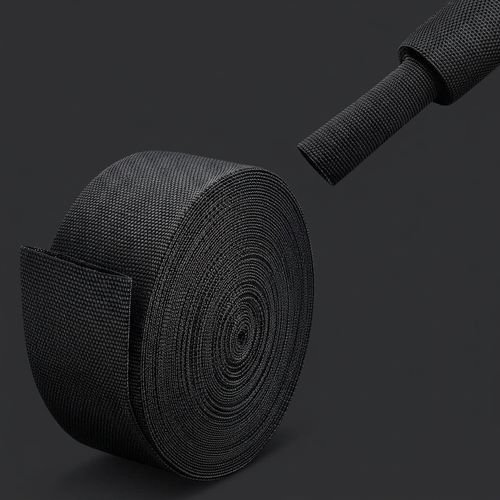
Feed the 1-3/8 inch braided sleeve over a 4-AWG amp cable before you attach the lug, then run an even heat-gun pass across the firewall grommet; the sleeve contracts 2:1 and locks the weave tight to the cable at the chassis contact point. The polyester-and-polyethylene weave takes 150,000 measured abrasion cycles before it frays, and the 2:1 ratio closes the ID to roughly 11/16 inch under steady heat. Where a cloth split-loom pops open at its seam against a sharp chassis edge, this braided sleeve has no seam to split and spreads the abrasion load across its full circumference. The 18-foot roll runs -40°F to 257°F, with a 30-day return if the shrunk ID is too small for your bundle.

  • Locks 2:1 over a 4-AWG amp cable at a firewall grommet
  • Polyester-polyethylene weave takes 150,000 abrasion cycles, no seam to split
  • Spreads abrasion across the full weave where a split-loom pops at the seam
Check price
2:1 Flat Heat Shrink Braided Sleeving

2:1 Flat Heat Shrink Braided Sleeving

★ 5 (13)

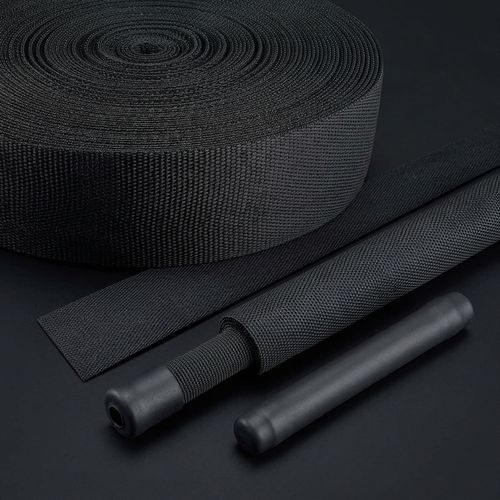
Route the flat heat-shrink sleeving over a harness run inside the door, press it to the panel retainer, and run the heat gun; the 50% contraction pulls it snug to the bundle without over-shrinking at a sharp bend. The flat-lay profile stores and routes in tight panel gaps where a round sleeve won't sit, and the controlled 2:1 ratio splits less at a curve than aggressive 3:1 or 4:1 forms during heat application. Round braided sleeving bunches at tight bends under a heat-gun pass, while the flat profile spreads the contraction evenly through a 90-degree run. It carries a 2-year warranty, the longest in the range, covering seam failure and delamination if it splits at a curve after install.

  • Routes flat through tight door-panel gaps a round sleeve won't fit
  • Controlled 2:1 contraction spreads evenly through a 90-degree bend
  • 2-year warranty, the longest in the range, covers seam failure
Check price
50% Heat Shrink Braided Wire Loom

50% Heat Shrink Braided Wire Loom

★ 3.7 (12)

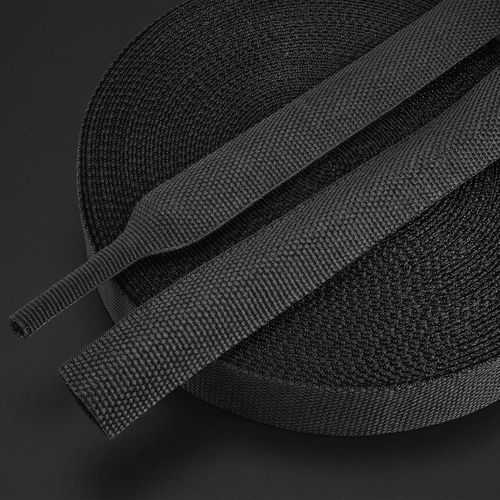
Run the 1/2 inch roll over a mid-gauge signal wire across the firewall; 18 feet covers most end-to-end cabin routing without a join. The 50% shrink ratio pulls the 3/4 inch ID down to about 3/8 inch for an even wrap, and every size from 3/8 to 1-3/8 inch carries the 150,000-cycle abrasion rating across a -40°F to 257°F range. Size down by one if the cable bundle runs thin; the 50% ratio leaves less post-shrink margin than a looser 2:1 sleeve. Inspect the seam sealing after the heat-gun pass, and a 30-day return covers any unit that arrives with a pre-split seam.

  • Covers end-to-end firewall wire routing in one 18-foot run
  • 50% shrink pulls 3/4 inch ID to about 3/8 inch at 150,000 abrasion cycles
  • 30-day return on any unit with a pre-split seam
Check price
Why the Numbers Hold Up After the Heat Soak

The reasons builders picked FOURUB over the cart pile, each tied to a spec sheet number you can verify yourself.

Verified 6-10 dB Drop, Not a Marketing Range

Lay the foam mat across the floor pan, drive the highway, and measure the cabin: buyers confirm the 6-10 dB drop the spec claims, not a rounded guess.

Two Heat Limits Disclosed, Not One Big Number

Wrap the 78mil mat around a header and the ceramic face holds 2300°F while the adhesive behind it grips cool metal rated to 230°F, both stated up front.

150,000 Wear Cycles Before the Weave Frays

Slide the braided sleeve over an amp wire that rubs chassis steel on every pothole; the polyester weave takes 150,000 measured cycles before it fails.

Kill the Adhesive Peel: Mount With Zip Ties

Stop wrestling peel-back tabs on a vibrating exhaust. The 195mil non-adhesive mat cinches down with stainless-steel zip ties and stays put through repeated heat cycles.

Picture the First Quiet Highway Mile

Sheet the full floor pan with one 26-sqft mat, add the firewall, and the first highway stretch runs noticeably quieter before you touch a single door panel.

1-Year Warranty, 30-Day Return If It Won't Fit

Creased mat on arrival? Send it back inside 30 days through the retailer for a replacement. Every product carries a 1-year warranty, and the braided sleeving runs two.

From Panel to Heat Source Without Power Tools

From measuring the panel to locking the sleeve, scissors and a heat gun handle every step, no welding rig required.

  1. 1

    Measure, Mark, and Cut

    Lay the mat on the floor, firewall, or hood liner, trace the panel shape with a marker, and cut with scissors or a utility knife.

  2. 2

    Choose Adhesive or Zip-Tie Mount

    Flat cabin surfaces take the peel-and-stick adhesive rated to 230°F; vibrating exhaust zones skip it and use stainless-steel zip ties instead.

  3. 3

    Orient the Ceramic Mat Correctly

    Face the ceramic side at the heat source and rest the adhesive or smooth side on the cooler metal behind it. Wrong side wastes the rating.

  4. 4

    Sleeve and Shrink Wire Harnesses

    Slide braided sleeving over the cable before the connectors, then run an even heat-gun pass until it contracts to half its diameter.

The Scenarios the Insulation Was Built Around

The real moments a builder reaches for each mat and sleeve, and the measured spec that carries the load in each one.

590mil Heat & Sound Deadening Foam Mat (26 sqft)

Kill Road Drone Before the First Highway Stretch

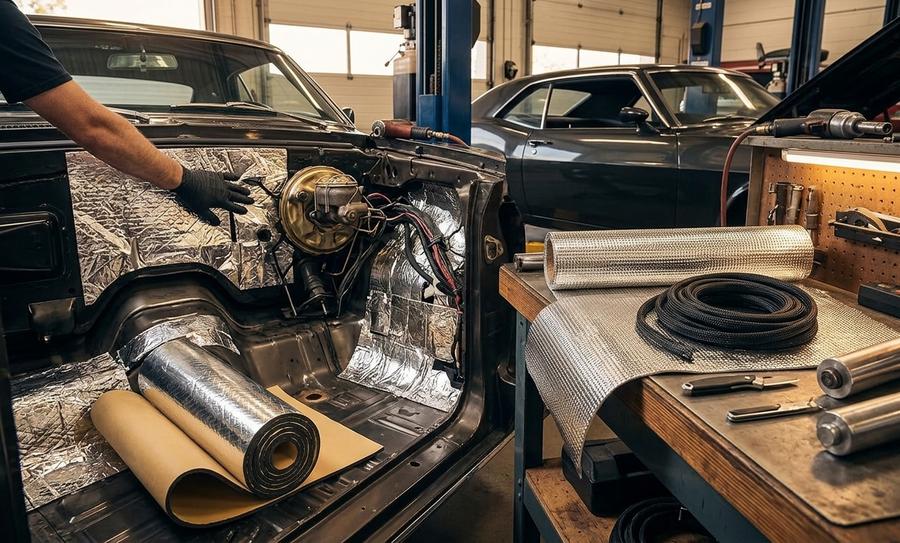
One foam mat unrolled across a bare floor pan drops the first highway mile 6-10 dB. Pull the seats and carpet, then press the closed-cell PE foam flat: it absorbs road-impact noise while the aluminum foil facing turns back 95.9% of underbody heat. One 26-sqft roll sheets a sedan floor with a couple inches to spare at the sills.

  • Unroll one mat across the full floor pan; 26 sqft covers a sedan cabin floor with 2-3 inches to spare at the sills.
  • Closed-cell PE foam absorbs road-impact noise while the aluminum foil layer turns back 95.9% of surface heat from the underbody.
  • Rated stable from -30°F to 300°F, so winter cold-starts and summer highway heat both stay inside the working range.
See the 590mil Heat & Sound Deadening Foam Mat
78mil Ceramic Fiber Heat Shield Mat (adhesive)

Wrap a 2300°F Header and Know the 230°F Adhesive Limit First

The ceramic mat prints two heat limits where competitors print one: 2300°F on the fiber face, 230°F on the adhesive backing. You've seen the big number on six pages, and none said what the backing survives. The fiber face takes direct source heat and reflects up to 97% of radiant load, while the adhesive grips cool metal only. Face the wrong side at a glowing header and you cook the backing off.

  • Face the textured ceramic side at the glowing header: direct contact rated to 2300°F continuous, reflecting up to 97% of radiant heat.
  • Press the adhesive backing onto clean metal on the cool side of the install, where the surface stays under its 230°F rating.
  • For a vibrating exhaust surface, switch to the 195mil non-adhesive mat and cinch it with stainless-steel zip ties through the pre-cut holes.
See the 78mil Ceramic Fiber Heat Shield Mat
Aluminum Foil Heat Shield Sleeve

Stop Vapor Lock Before a Summer Heat Soak Strands You

The aluminum foil sleeve holds 485°F continuous and reflects up to 90% of radiant heat off a fuel line beside a turbo. On a summer idle that line soaks enough radiant heat to vaporize fuel before it reaches the injector; the sleeve drops its surface below the vaporization point. It stays flexible to -40°F, so a hard overnight freeze won't crack the material. The 1.5-inch size clears most fuel and brake runs with room for clamp tabs.

  • Slide the foil sleeve over the fuel line and clamp both ends; 485°F continuous handles turbo proximity without burning through.
  • Reflected radiant heat, up to 90%, keeps the line surface below the vaporization point through a stop-and-go summer idle.
  • Rated to -40°F, so a start after a hard overnight freeze won't crack or delaminate the sleeve wall.
See the Aluminum Foil Heat Shield Sleeve
2:1 Heat Shrink Braided Sleeving

Route the Amp Power Wire Through 150,000 Pothole Cycles Without Fraying

The braided sleeving takes 150,000 measured abrasion cycles before the polyester-polyethylene weave wears through. An amp power cable fed through a firewall grommet rubs bare steel on every road impact; the sleeve carries that friction load across its full circumference, with no seam to split. A heat-gun pass shrinks it 2:1 around the cable, locking the weave so it can't slide or bunch behind the panel.

  • Feed the braided sleeve over the amp cable before you pin the lug; the 1-3/8 inch ID passes most 4-AWG power wire with the connector on.
  • Run a heat gun at steady speed and the sleeve contracts to half its diameter, gripping the cable and covering the grommet edge.
  • 150,000 abrasion cycles rated, so the weave outlasts the chassis wear point it protects, backed by a 2-year warranty on the flat-style sleeving.
See the 2:1 Heat Shrink Braided Sleeving

The Heat Numbers Other Insulation Guides Leave Vague

The specs competitors name but never quantify, with measured limits to weigh their vague claims against.

2300°F / 230°F backing

Face the ceramic side at a glowing header and it holds 2300°F; the 230°F adhesive grips the cool metal behind it, not the flame, so nothing melts off after a full heat-soak cycle.

Most heat-shield pages print one big number and stop, never separating the ceramic face from the adhesive backing's real ceiling.

manufacturer spec
150,000 wear cycles

Slide the braided sleeve over an amp wire that rubs a chassis edge on every pothole; the weave takes 150,000 measured abrasion cycles before it frays through.

Competitor pages call their loom 'abrasion resistant' and leave it there, with no cycle count on how long the weave actually lasts.

manufacturer spec
485°F continuous

Wrap the foil sleeve around a fuel line beside the turbo; it holds 485°F continuous and reflects up to 90% of the radiant heat that starves an engine into vapor lock, steady down to -40°F.

Nearly every guide names aluminum-foil shielding without giving the continuous temperature the sleeve survives before it fails.

manufacturer spec
6-10 dB + 95.9% heat

Lay one foam mat across the floor and firewall; it drops cabin noise 6-10 decibels and reflects 95.9% of the surface heat in the same pass, no second product needed.

Buying guides split sound and heat into separate mats and never measure a single layer doing both at once.

manufacturer spec
4.5★ / 202 reviews

Owners who ran these through engine-bay heat soak and floor drone rate the range 4.5 stars across 202 verified buyer reviews, scored after months of use, not a launch-week guess.

A no-name guide rarely shows a verified buyer count you can weigh its claims against.

202 verified buyer reviews
26-32.5 sqft per mat

Measure your floor and firewall first; one mat covers 26 to 32.5 square feet, enough to sheet a sedan cabin pan and the firewall from a single roll.

Competitor guides tell you to cover the floor but never say how many square feet one mat actually spans.

manufacturer spec
FOURUB thermal insulation products on a workbench

Three Insulation Jobs, One Brand That Names Its Limits

You've read enough spec sheets to distrust a single big number with no zone attached to it. FOURUB splits every heat rating by the zone it covers, and you see both sides of each limit before you buy. Sound deadening runs on PE-foam-and-foil mats that drop cabin noise 6-10 dB and reflect 95.9% of underbody heat. Ceramic-fiber mats take direct-source heat, holding 2300°F on the fiber face while the adhesive backing sits on cool metal rated to 230°F. Wire protection comes from fiberglass and aluminum sleeves and 2:1 braided sleeving rated to 150,000 abrasion cycles. Each product names the surface it belongs on and the limit it stops at, so you install to the right number instead of guessing.

Take the daily driver whose turbo-adjacent fuel line vapor-locked on a July idle. He wrapped the line in a 1.5-inch aluminum foil sleeve rated 485°F continuous, and three summer seasons later he has logged no vapor-lock event. The cheaper foam wrap he tried first saturated with heat and then conducted it straight into the fuel. This sleeve reflects the radiant load before it reaches the line.

You get all of it backed by a 1-year warranty, two years on the braided sleeving.

Learn more about FOURUB

What Builders Report After the Heat Soak

Verified buyer accounts from floor-pan, engine-bay, and fuel-line installs, matched to the product each one bought.

★★★★★Verified Purchase

Good thick insulation. I used it on my floorboards. Great adhesion and the foil is a lot stronger than it looks, it is very difficult to rip. Cut to size with a razor knife. Definitely good stuff for lots of applications.

Wesley T.590mil Heat & Sound Deadening Foam Mat (26 sqft)
★★★★★Verified Purchase

By far my favorite fire sleeve with the silicone coating. It works great in close proximity to exhausts, manifolds and turbos, keeping electrical wires and vacuum lines protected from the heat on my performance build.

Danielle R.Silicone Coated Fiberglass Heat Shield Sleeve
★★★★★Verified Purchase

This heat shield exceeded my expectations. The 78mil construction feels substantial, the adhesive backing held after surface prep, and I noticed a real drop in heat transfer near a high-heat area of the engine bay.

Marco S.78mil Ceramic Fiber Heat Shield Mat (adhesive)
★★★★★Verified Purchase

Bought this for my 2007 Civic because road and tire noise was riding along with me. The cabin feels noticeably calmer now. The roll covered multiple areas and the adhesive stuck well to clean surfaces.

Priya N.390mil Sound Deadening Heat Shield Mat (32.5 sqft)
★★★★★Verified Purchase

Used a couple feet to insulate a fuel line from pump to carb on a 67 Mustang that was vapor-locking something awful. Worked like a charm. Also great as a chafing guard on wires. Highly recommend.

Curtis W.Aluminum Foil Heat Shield Sleeve
★★★★★Verified Purchase

Great for making harnesses and cleaning up cables. As long as it fits inside the sleeve before shrinking, any cord cleans up nicely. Easy to cut to length and durable enough to survive some abuse.

Aaron K.2:1 Flat Heat Shrink Braided Sleeving
★★★★★Verified Purchase

Super thick and heavy duty. I used it to protect a coolant line in my Discovery 2. Zero complaints, it works as advertised and it has the abrasion resistance I needed. Did not shred when I cut it down.

Leon P.2:1 Heat Shrink Braided Sleeving
★★★★☆Verified Purchase

Blocks the heat out of my work truck where I sit right above the engine compartment. Very easy to install and cut to shape, folds up small and weighs nothing. Face the metal side toward the heat source.

Teresa M.195mil Ceramic Fiber Heat Shield Mat (non-adhesive)

Spec by Spec Against the Usual Mats

How the numbers line up against the brands you've already shortlisted, on the specs that decide the install.

SpecFOURUBTypical Competitors
Ceramic mat peak temp (ceramic face)2300°F continuous (manufacturer spec)Foil-foam mats (Kilmat, Noico): ~500-600°F surface max; Ceramic competitors: rarely specify side-specific limits
Adhesive backing temp limit (disclosed)230°F, stated and zone-separatedMost ceramic listings: backing temp limit not disclosed
Sound deadening noise reduction6-10 dB (foam mat spec)Kilmat: 8-9 dB claimed; Dynamat: varies by product, no published range
Coverage per mat roll26-32.5 sqft by thicknessBudget brands: advertise 36 sqft, compress on thickness; Dynamat: sold per tile, total sqft varies by kit
Wire sleeving abrasion rating150,000 wear cycles (manufacturer spec)Most braided loom: 'abrasion resistant', no cycle count published
Aluminum sleeve continuous temp485°F continuous (251°C)Competitor foil sleeves: 400-500°F claimed, peak vs continuous not broken out

Day 1 to Year One on the Same Install

What the mats and sleeves do from the first highway drive through the first winter, and when the return window closes.

  1. Day 1, after the install

    Foam mat cut to the floor pan and pressed flat, and the first highway drive gives the 6-10 dB drop; the road drum that made you raise your voice is gone under the foam layer. The 30-day return window stays open to confirm fit and noise before it closes.

  2. Week 1

    Ceramic mat runs its first heat-soak cycle near the header. The ceramic side ran hot while the adhesive backing held cool metal at its 230°F limit. Nothing peeled; press the edge after cooldown to confirm the bond.

  3. Month 1

    Braided sleeving has taken a month of road vibration over the firewall grommet with no loosening. The heat-shrink lock holds the weave to the cable, and the wire under it shows no abrasion marks.

  4. Year 1+

    Foam mat holds its noise and heat-reflection rating inside the -30°F to 300°F range under the 1-year warranty. Braided sleeving keeps its 150,000-cycle abrasion rating, and the flat-style version carries a 2-year warranty on seam failure.

Where the Mats and Sleeves Go to Work

The real spots a builder pulls each product out for, backed by the rating it's cut to hold.

Floor and Firewall Deadening

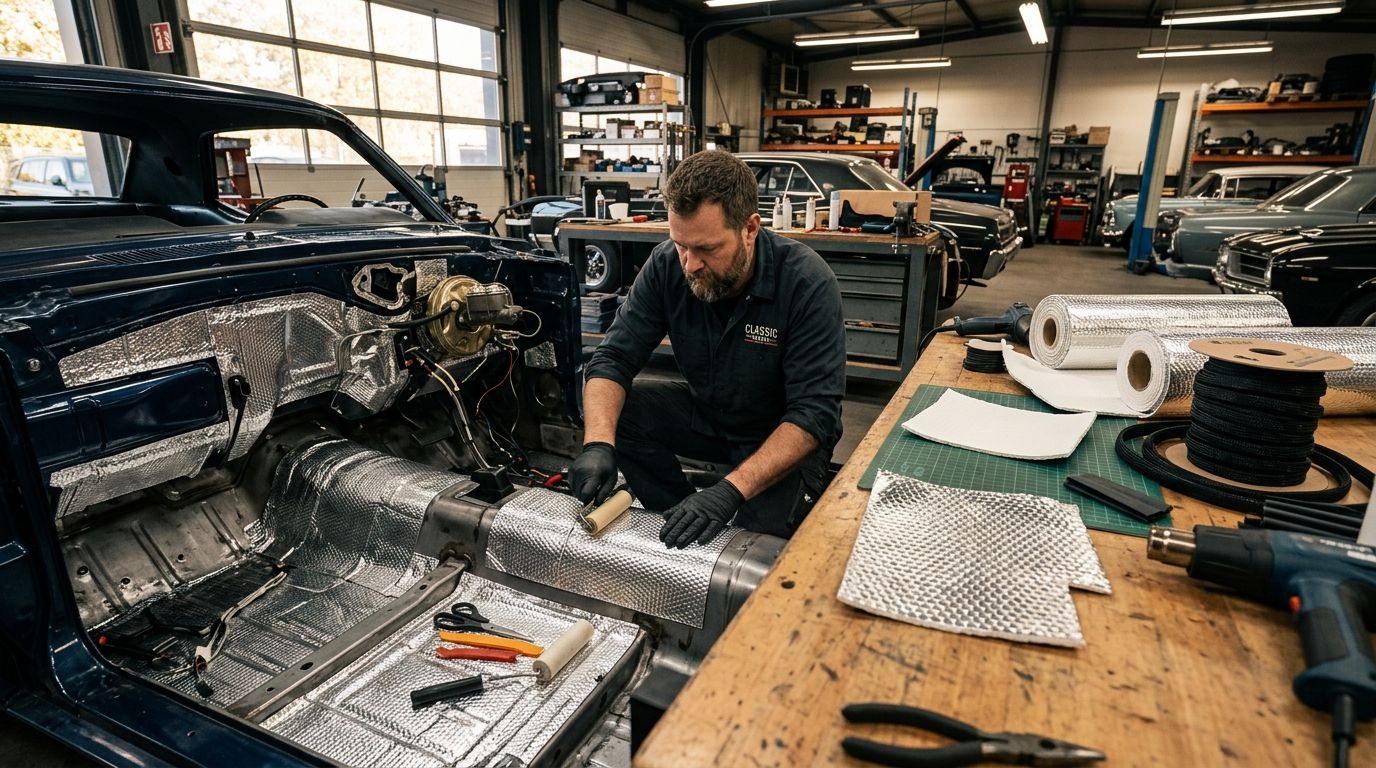
Pull the front seats and carpet, trace the floor pan onto the 15mm mat, cut with scissors, and press the adhesive down. One pass drops road noise 6-10 dB and reflects 95.9% of underbody heat at the same time.

Exhaust Header Wrap

Cut the ceramic mat to width and wrap the header primaries with the ceramic side facing out. The non-adhesive version cinches with stainless-steel zip ties through the mounting holes and takes 2300°F at the source.

Fuel Line Protection Near a Turbo

Slide the aluminum foil sleeve over the fuel line and clamp each end. It holds 485°F continuous at the surface and reflects 90% of the radiant heat that would otherwise soak into the fuel.

Hood Liner and Battery Box Shielding

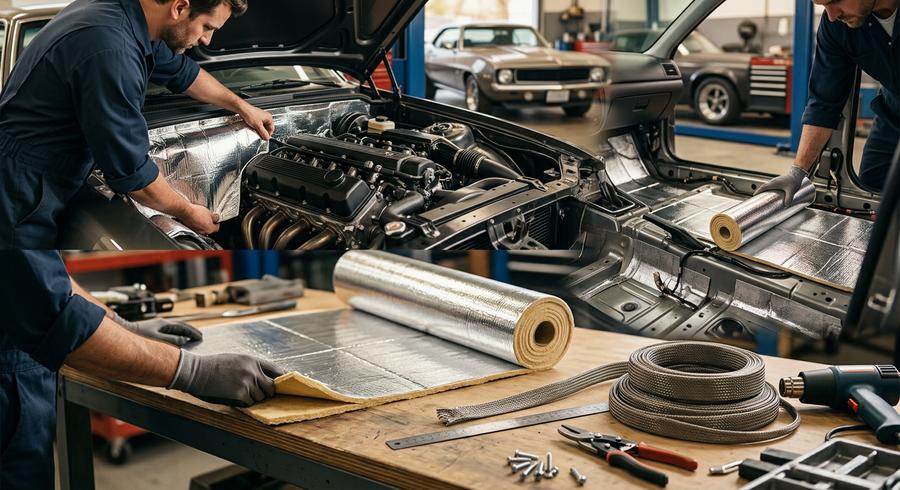
Trim the ceramic mat to the hood liner shape and clip it in with the factory retainers. It blocks under-hood radiant heat after engine-off and pulls the felt layer rodents chew through to nest.

Amp Power Wire Routing

Feed braided sleeving over a 4-AWG cable before the fuse holder goes on. A heat-gun pass at the firewall grommet locks the sleeve to the cable at a 150,000-cycle abrasion rating on every bare-steel contact point.

What Owners Actually Worry About

The complaints builders raise before buying, each answered with the spec number and the install method that resolves it.

Adhesive Tab Rips Off the Exhaust After Two Heat Cycles

End the chase with peel-back tabs on a vibrating exhaust. The self-adhesive backing is rated to 230°F, not the 2300°F of the ceramic face, so anything hotter than the exhaust pipe surface releases it. Toss the peel-stick version for exhaust wraps and cinch the 195mil non-adhesive ceramic mat down with stainless-steel zip ties; it stays through the heat cycles.

One Big °F Number, No Zone Breakdown

Strip away the single-number marketing. The ceramic side carries 2300°F, the adhesive behind it tops out at 230°F, and every competitor prints only the bigger figure. Install the mat without knowing the backing limit and you rip a melted tab off the manifold. Face the ceramic side at the heat, adhesive on cool metal, every time.

Noise Job Done, Still Hear Road on the Highway

Kill floor drone with the foam mat, but skip the doors and roof and the cabin still resonates. Sound enters through every unlined panel; the floor mat alone drops 6-10 dB off the underbody and firewall path, and doors and trunk add the next layer. One 26-sqft mat covers the floor pan, so plan a second roll for the firewall and doors.

Thin Foil That Only Bounces Radiant Heat

Stop expecting one product to absorb and reflect at once. The aluminum foil sleeve reflects up to 90% of radiant heat at 485°F continuous, the right tool for a fuel line beside a heat source. The foam mat absorbs vibration and reflects surface heat together. Stack them where needed: sleeve the fuel line, mat the floor, and skip ripping one out to do the other's job.

No Warranty, No Return, On Your Own After Shipping

Yank a mat off a curved panel it won't match and the 30-day return window through the retailer covers the exchange; the wrong-size unit ships back and the replacement arrives direct. Every product carries a 1-year warranty against material defects, two years on the flat-style braided sleeving, covering seam failure and delamination.

1-year warranty on every product; 2-year on the flat-style braided sleeving

Questions Builders Ask Before They Cut

The pre-purchase questions on temperature limits, coverage, and install method, each answered with the spec.

What is the best heat shield material for a car's firewall?

Ceramic fiber holds the highest continuous temperature, 2300°F at the face, and reflects up to 97% of radiant heat, which makes it the right choice for firewall and exhaust-proximity zones. Foam mat handles cabin-side heat and noise together at a lower ceiling, rated -30°F to 300°F. Match the material to how hot the surface actually runs.

Does sound deadening also reduce heat?

The foam mat does both at once. The PE foam layer damps road vibration and absorbs impact noise for a 6-10 dB drop, while the aluminum foil facing reflects 95.9% of surface heat from the underbody. One mat, one install, two measurements. There is no separate heat product to buy for the floor pan.

What products does FOURUB make for automotive insulation?

The range covers three jobs. Foam sound deadening mats in 15mm and 10mm handle cabin noise and heat. Ceramic fiber heat shield mats in 78mil adhesive and 195mil non-adhesive handle direct exhaust and firewall heat. Wire protection comes from silicone fiberglass sleeves, aluminum foil sleeves, and 2:1 heat-shrink braided sleeving.

What is the difference between heat reflection and heat insulation?

Reflection turns radiant heat back before it contacts the surface; the aluminum foil sleeve reflects 90% of the radiant load off a fuel line. Insulation absorbs and slows heat transfer through its mass; the foam mat absorbs impact noise and retards conducted heat. Ceramic fiber mat does both, reflecting radiant at the face and insulating by mass.

Is butyl or foam better for sound deadening?

Butyl rubber adds mass and excels at damping panel resonance on door skins and roofs. PE foam excels at noise absorption and heat reflection at lower weight. FOURUB uses PE foam for combined heat-shield and noise performance, lighter per square foot. For vibration-dominant door skins, a butyl product is the stronger choice.

What temperature can the ceramic fiber heat shield withstand?

The ceramic fiber face withstands 2300°F continuous and reflects up to 97% of radiant heat. The adhesive backing is rated separately at 230°F, and it grips cool metal on the side away from the heat source. Always face the ceramic side toward the heat, never the adhesive backing, to stay inside both ratings.

What is the adhesive backing's temperature limit on the ceramic mat?

The adhesive backing is rated to 230°F (110°C). Above that the adhesive softens and releases, so it is not designed to touch the exhaust pipe surface. Mount the mat with the ceramic side facing the heat and the adhesive on cool metal behind it, or use the 195mil non-adhesive version with zip ties for surfaces above 230°F.

How much does one foam mat cover?

The 15mm mat covers 26 square feet at 96"×39"; the 10mm flagship covers 32.5 square feet at 120"×39". One 10mm roll spans a full sedan floor pan and the firewall in a single piece, enough for both zones without a second roll. Measure your floor and firewall before choosing the thickness.

Is there a warranty on FOURUB products?

All products carry a 1-year manufacturer warranty against material defects. The flat heat-shrinkable braided sleeving carries a 2-year warranty, the only extended coverage in the range. Warranty covers delamination and seam failure, not damage from installation error, so follow the orientation and mounting steps for the surface temperature.

Can I return a mat if it arrives creased or damaged?

A 30-day return window through the retailer covers units that arrive damaged, creased from shipping, or wrong size. The retailer return process handles the exchange; ship the original back in its packaging and the replacement ships direct. Folded mats can arrive with crease lines, so inspect on arrival before the window closes.

Can you put an adhesive heat shield mat directly on an exhaust pipe?

The adhesive backing is rated to 230°F, and exhaust pipe surface temperatures at operating temp run several hundred degrees higher, so the adhesive fails on direct contact. For exhaust pipes use the 195mil non-adhesive ceramic mat mounted with stainless-steel zip ties through the pre-cut holes. The ceramic face is rated to 2300°F; only the adhesive layer fails on exhaust contact.

How do I install the non-adhesive ceramic mat on a vibrating exhaust?

Trim the 195mil mat to the pipe length and width with scissors. Feed stainless-steel zip ties through the pre-cut mounting slots and cinch them around the pipe over the mat. Face the textured ceramic side outward, away from the pipe, and rest the smooth backing side against the metal. Stainless zip ties outlast galvanized under repeated heat cycling.